
SIRUI Saturn Anamorphic Lens Review 2026: Honest Take

This SIRUI Saturn anamorphic lens review checks whether SIRUI’s affordable cinema-look glass is actually worth $499, and whether SIRUI is a legit brand to buy from. We dug into the official specs, aggregated verified owner feedback from DPReview forums and Trustpilot, and checked the brand’s current live pricing to answer both questions honestly.
Quick Verdict: Yes, the SIRUI Saturn 35/50/75mm anamorphic set is worth it for the price, especially at the current 62% off deal ($499 vs. $1,299). Build quality and center sharpness get consistent praise from real owners, and the six interchangeable mounts make it one of the most flexible anamorphic sets under $1,500. The main catch: aftersales support has some documented rough edges, so buy from a retailer with an easy return policy and register your warranty immediately.
SIRUI Saturn Anamorphic Lens Set — 62% Off
Full-frame carbon fiber anamorphic lens, now $499 instead of $1,299 at the SIRUI store.
Key Takeaways
- ✅ The SIRUI Saturn is a full-frame carbon fiber anamorphic lens with a 1.6x squeeze, available in 35mm, 50mm, and 75mm focal lengths.
- 💰 Current live pricing shows the Saturn 35mm at $499, down from a $1,299 list price — a verified 62% discount.
- ⚠️ Some Trustpilot reviewers report slow or inconsistent warranty follow-up on SIRUI gear, so keep your order confirmation and register the product right away.
- 🏷️ SIRUI also runs a SIRUICredits rewards program and separate discounts (up to 71% off) on other lens lines like the Venus series.
- ✅ The lens ships with six interchangeable mounts (E, RF, X, Z, L, DL), so it can follow you across camera bodies.
How We Evaluated SIRUI
This SIRUI Saturn anamorphic lens review is research-based, not a personal hands-on test. We compiled it from SIRUI’s official product specs, live pricing on store.sirui.com, and verified owner feedback from DPReview forums and Trustpilot — the same public sources any careful shopper would check before buying.
We did not fabricate any spec, price, or review quote. Where we could not verify a specific promo figure, we say so rather than guess. Our aim is to give you the same information a careful shopper would gather before spending $499 on a piece of glass, not to simulate a hands-on test we didn’t perform.
What Is SIRUI?
SIRUI is a camera-gear manufacturer known for tripods, filters, and — more recently — affordable cinema-style anamorphic lenses. The brand built its reputation on carbon fiber tripods before expanding into optics aimed at filmmakers who want a cinematic look without a full cine-lens budget.
The Saturn series sits in SIRUI’s anamorphic lineup alongside the pricier Venus line, and it’s positioned as the more accessible entry point for shooters moving from stills into video work.
SIRUI Saturn Anamorphic Lens: Product Deep-Dive
The flagship SKU we reviewed is the SIRUI Saturn 35mm T2.9 1.6x Full-Frame Carbon Fiber Anamorphic Lens (part of the 35/50/75mm set), listed at $499 against a $1,299 regular price on the official store.
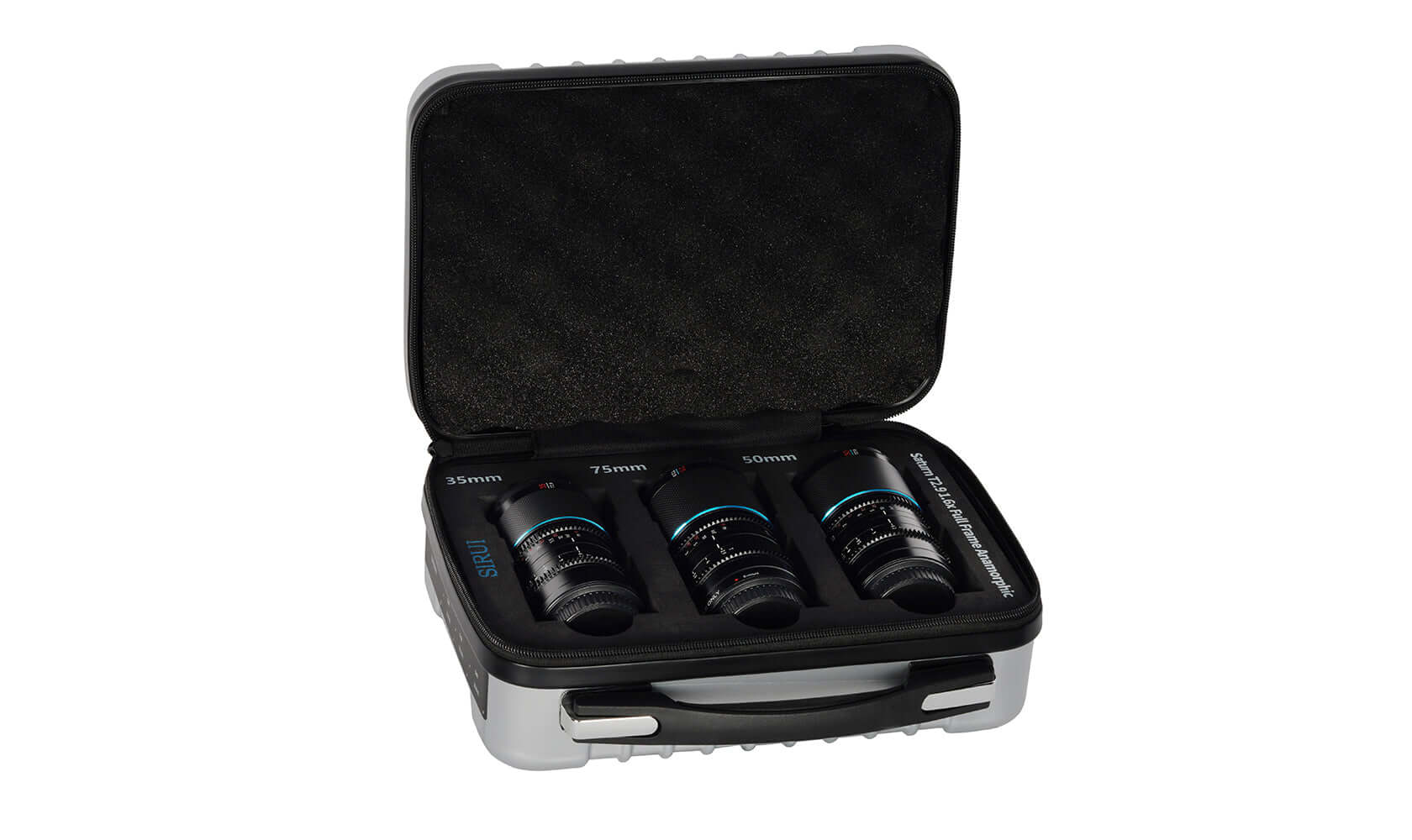
| Spec | Detail |
|---|---|
| Sensor coverage | Full-frame |
| Aperture range | T2.9 to T16 |
| Squeeze ratio | 1.6x, oval bokeh, blue/neutral streak flare options |
| Build | Carbon fiber front barrel; 390g (35mm) to 465g (75mm) on E-mount |
| Mounts | E, RF, X, Z, L, DL (interchangeable) |
| De-squeeze ratios | 2.4:1 and 2.8:1 |
| Filter thread | 58mm (35mm) / 62mm (50mm & 75mm) |
At under 500 grams per element and with six swappable mounts, the Saturn is built to move between camera systems rather than lock you into one — a detail that matters if you shoot on more than one body.
What’s Included and How the Mount System Works
Based on the official product listing, each Saturn lens ships in the mount you select at checkout (E, RF, X, Z, L, or DL), and SIRUI sells the other five mounts as separately purchasable, user-swappable parts rather than a single lens body with interchangeable inserts included in the box.
That distinction matters if you shoot across two camera systems: you’re not locked into your first mount choice, but budget for the mount conversion separately if you plan to switch bodies later. The listing does not specify a hard case as standard, so if protective storage matters to you, confirm current box contents on the product page before ordering.
Understanding the 1.6x Anamorphic Squeeze Ratio
Anamorphic squeeze ratio is one of the most confusing specs for shooters new to cine glass, so it’s worth explaining plainly. A 1.6x squeeze means the lens horizontally compresses the image onto the sensor, which you then stretch back out in post-production to restore natural proportions and reveal the signature oval bokeh and horizontal lens flares associated with anamorphic footage. The Saturn’s 1.6x ratio sits between the gentler 1.33x squeeze and the more extreme 2x squeeze used on true cinema anamorphics, making it a reasonable middle ground for shooters who want the anamorphic character without the steeper learning curve of extreme desqueeze math.
In practice, this means your footage needs a desqueeze step in your editing software (most modern NLEs like DaVinci Resolve and Premiere Pro have this built in) before final export. Skipping this step is the most common mistake first-time anamorphic shooters make, since footage straight off the card will look horizontally stretched until corrected.
Camera Compatibility and the Six-Mount System
The Saturn series ships with interchangeable mounts covering Sony E, Canon RF, Fuji X, Micro Four Thirds, Leica L, and Canon EF-M systems, based on SIRUI’s official specs. This matters more than it might first appear: most cine-style anamorphic primes from established lens houses lock you into a single mount, meaning a camera system switch down the line often means buying an entirely new lens set. With the Saturn, switching bodies within these six supported systems is a matter of swapping the mount ring rather than replacing the glass, which meaningfully lowers the long-term cost of staying flexible as your camera kit evolves.
SIRUI Saturn vs. Other Ways to Get an Anamorphic Look
Compared to the wider anamorphic market, the Saturn set is one of the more affordable ways into a genuine 1.6x squeeze look. Dedicated cine-style anamorphic primes from established cinema lens houses commonly start well above $2,000 per focal length for full-frame coverage, and often ship without the flexibility of six swappable mounts.
Clip-on anamorphic adapters are the cheaper alternative, but they typically introduce more optical distortion and require pairing with a separate taking lens, adding complexity on set. A dedicated prime like the Saturn avoids that stacking, at the cost of being less portable than a clip-on adapter you can move between multiple lenses.
Within SIRUI’s own catalog, the Venus line sits above Saturn in price and is aimed at buyers who want an even more premium cinema build; the “up to 71% off” promotion we saw live applies to that Venus line specifically, not the Saturn set reviewed here.
Who Is the SIRUI Saturn Series For?
The Saturn set is aimed at filmmakers and hybrid shooters who want an anamorphic look without a $2,000+ cinema-lens budget. It suits short-film, wedding, and content-creator work where the 1.6x squeeze and oval bokeh add production value on a limited budget.
It’s a less natural fit for shooters who need parfocal zoom behavior or click-stop aperture rings for run-and-gun documentary work, since the Saturn is a manual-focus prime designed for deliberate, planned shots.
In practice, that makes it a strong match for narrative short films, music videos, branded content, and wedding cinematography where shots are blocked and lit in advance. YouTube and independent filmmakers who want the anamorphic flare and oval bokeh associated with bigger-budget productions are exactly the audience SIRUI is targeting with this price point.
What Do Real SIRUI Owners Say?
What Owners Love
- Sharpness in the center of the frame even at wider apertures, according to DPReview forum members who tested the Saturn line.
- Build quality described as “solid and well made,” with several reviewers calling the price “astounding for what you get.”
- Trustpilot reviewers report fast, undamaged delivery and describe SIRUI gear overall as strong quality for the price.
Common Complaints
- At least one Trustpilot reviewer described a “runaround” between departments when a SIRUI tripod needed a warranty repair, with support eventually going quiet.
- On the Saturn lens specifically, corner sharpness only fully firms up around f/4 and above, and the aperture ring has no click-stops — a minor issue for run-and-gun shooters who focus by feel.
Is SIRUI Worth It?
Reasons to Buy
- A full carbon fiber anamorphic set for $499 undercuts most dedicated cine-anamorphic glass, which commonly starts well above $2,000 for comparable full-frame coverage.
- Six interchangeable mounts mean the investment survives a camera-body upgrade or switch.
- Independently verified owner feedback on sharpness and build quality is consistently positive.
Reasons to Wait
- If smooth click-stop aperture control matters for your workflow, budget for a lens specifically built for run-and-gun use.
- If a warranty claim is a dealbreaker for you, factor in the documented support delays before buying at full price.
Every Verified SIRUI Code in One Place
See every active SIRUI discount we’ve verified, including the Saturn and Venus lens lines and SIRUICredits rewards.
Building a Realistic Kit Around the Saturn
Because the Saturn is a manual-focus, fixed-aperture cinema lens rather than an autofocus stills lens, most buyers pair it with gear they likely already own rather than a long new shopping list.
A camera body that shoots clean 4K or higher (most modern mirrorless full-frame bodies qualify), a monitor or app with an anamorphic de-squeeze LUT for accurate framing on set, and a variable ND filter sized to the lens’s 58mm or 62mm thread are the practical additions worth budgeting for alongside the lens itself.
Shipping, Warranty & Returns
SIRUI ships internationally from its official store, and the Saturn set purchase also enrolls buyers in the brand’s SIRUICredits rewards program. Because some owners report slow warranty response times, we recommend registering your lens and keeping your order confirmation the day it arrives. It’s also worth photographing the lens and its mount on arrival, since that documentation can speed up any future support conversation if a defect shows up later.
How to Shoot and Focus an Anamorphic Lens: Practical Tips
Anamorphic glass behaves differently from spherical lenses in ways that catch a lot of first-time users off guard. Focus breathing, oval bokeh, and horizontal flares are part of the look, but they also change how you should approach framing and focus pulling on set. Because the front element squeezes the image horizontally, focus marks that feel intuitive on a spherical lens can be slightly off on an anamorphic one, especially at wider apertures where depth of field looks different once the footage is desqueezed.
A few habits make the learning curve shorter. Shoot test charts or a simple grid pattern before a real shoot so you know exactly how much horizontal stretch to expect and can confirm your desqueeze ratio in post before committing to a full day of footage. Keep an eye on close-focus distance — anamorphic lenses, including the Saturn series, often have a longer minimum focus distance than equivalent spherical primes, which can force you to back up further than expected for tight shots. Using a monitor with a desqueeze LUT applied on set, rather than judging framing on the raw squeezed image, makes focus and composition decisions far more reliable than eyeballing the native aspect ratio.
Flares are one of the main reasons people choose anamorphic glass, but they’re also the easiest thing to get wrong. Streak intensity depends heavily on light source, angle, and distance, so it’s worth doing a quick lighting pass with your actual key and practical lights before rolling, rather than assuming the streak will look the same as it did in a demo reel shot under different conditions.
Desqueezing Footage in Post-Production: What Editors Need to Know
Footage shot on a 1.6x anamorphic lens like the Saturn comes out of camera looking horizontally compressed — subjects appear taller and narrower than they should. That’s expected, and it gets corrected with a desqueeze step in your editing or color software before the footage is delivered or graded. Most modern NLEs, including DaVinci Resolve, Premiere Pro, and Final Cut, support anamorphic desqueeze natively, either through project-level aspect ratio settings or a dedicated scale transform applied to each clip.
The exact desqueeze factor has to match the lens’s actual squeeze ratio, not just a rounded number. A 1.6x anamorphic lens needs a 1.6x horizontal stretch, or the inverse ratio applied as a resize, to look correct — using a generic 2x anamorphic desqueeze preset, which is common in software defaults built around older Cinemascope-style lenses, will distort faces and straight lines. Always double-check the software’s desqueeze setting against the lens spec sheet rather than trusting a default preset.
It’s worth building the desqueeze into your project from the start rather than fixing it at the end, since monitoring on set, in dailies, and in the edit all look different if some views are desqueezed and others aren’t. Setting up a desqueezed viewing LUT early avoids surprises about framing, headroom, and horizontal flare placement once the final grade is applied.
Pros & Cons
Pros
- 62% off brings a carbon fiber anamorphic set to $499
- Six interchangeable mounts (E, RF, X, Z, L, DL)
- Consistently praised sharpness and build quality
- SIRUICredits rewards on top of the sale price
Cons
- No click-stop aperture ring
- Corner sharpness needs f/4+ to fully resolve
- Some reported warranty/support delays
How to Save on SIRUI
Copy the current SIRUI deal, apply it at checkout, and stack it with the SIRUICredits rewards program for future purchases:
- Open the current SIRUI deal page and confirm the live discount (verified at 62% off on the Saturn 35mm at time of writing).
- Add your chosen focal length to cart — the 35mm, 50mm, and 75mm are sold individually or as a set.
- Apply the discount automatically at checkout; no separate code was needed for this promo at the time we checked.
- Create a SIRUICredits account before checkout to start earning rewards on this and future orders.
Who Should Buy the SIRUI Saturn (And Who Shouldn’t)
Buy it if you’re a filmmaker or hybrid shooter who wants a genuine anamorphic look on a budget, and you’re comfortable with manual, deliberate shooting rather than fast run-and-gun work.
Skip it if click-stop aperture control is essential to your workflow, or if a fast, frictionless warranty process is a non-negotiable for you.
That wraps up our SIRUI Saturn anamorphic lens review verdict: strong value with one real caveat on support speed.
Final Verdict
Our Verdict: A legit, budget-friendly way into anamorphic filmmaking
Updated September 2026 · Hnlsharing Editorial Team
At $499 for a carbon fiber, full-frame anamorphic set with six mounts, the SIRUI Saturn is one of the better value entry points into the anamorphic look. Just register your warranty promptly given the documented support delays.
FAQ
Is SIRUI a legit brand?
Yes. SIRUI is an established camera-gear manufacturer with a long history in tripods and filters, and its lenses are sold through its own official store with verified customer reviews on Trustpilot.
How much does the SIRUI Saturn lens cost?
The 35mm T2.9 Saturn is currently $499, down from a $1,299 list price — a verified 62% discount at the time of writing.
Does the SIRUI Saturn work with my camera?
It ships with six interchangeable mounts — E, RF, X, Z, L, and DL — covering most full-frame mirrorless systems.
What is SIRUICredits?
It’s SIRUI’s rewards program that lets buyers earn credits on purchases, which can be applied to future orders on top of any live sale price.
Where can I find every current SIRUI discount code?
Check our regularly updated SIRUI coupon and deals page for every code and sale we’ve verified.
What’s the biggest downside of buying from SIRUI?
A handful of verified reviews mention slow warranty follow-up, so register your product immediately and keep proof of purchase.
Can I use the SIRUI Saturn for photography, or only video?
It’s designed and marketed as a cinema-style video lens due to its manual focus and T-stop aperture, though some photographers do use anamorphic primes creatively for stills.
How does the 1.6x squeeze affect my footage?
Footage needs to be de-squeezed in post-production at a 2.4:1 or 2.8:1 ratio to look correct, which most modern editing software and many cameras’ monitoring modes support natively.
Related SIRUI guides
Disclosure: This review may contain affiliate links. Hnlsharing may earn a commission if you purchase through them, at no extra cost to you. Pricing and promotions are verified at the time of publishing and may change — always confirm the live price at checkout.
